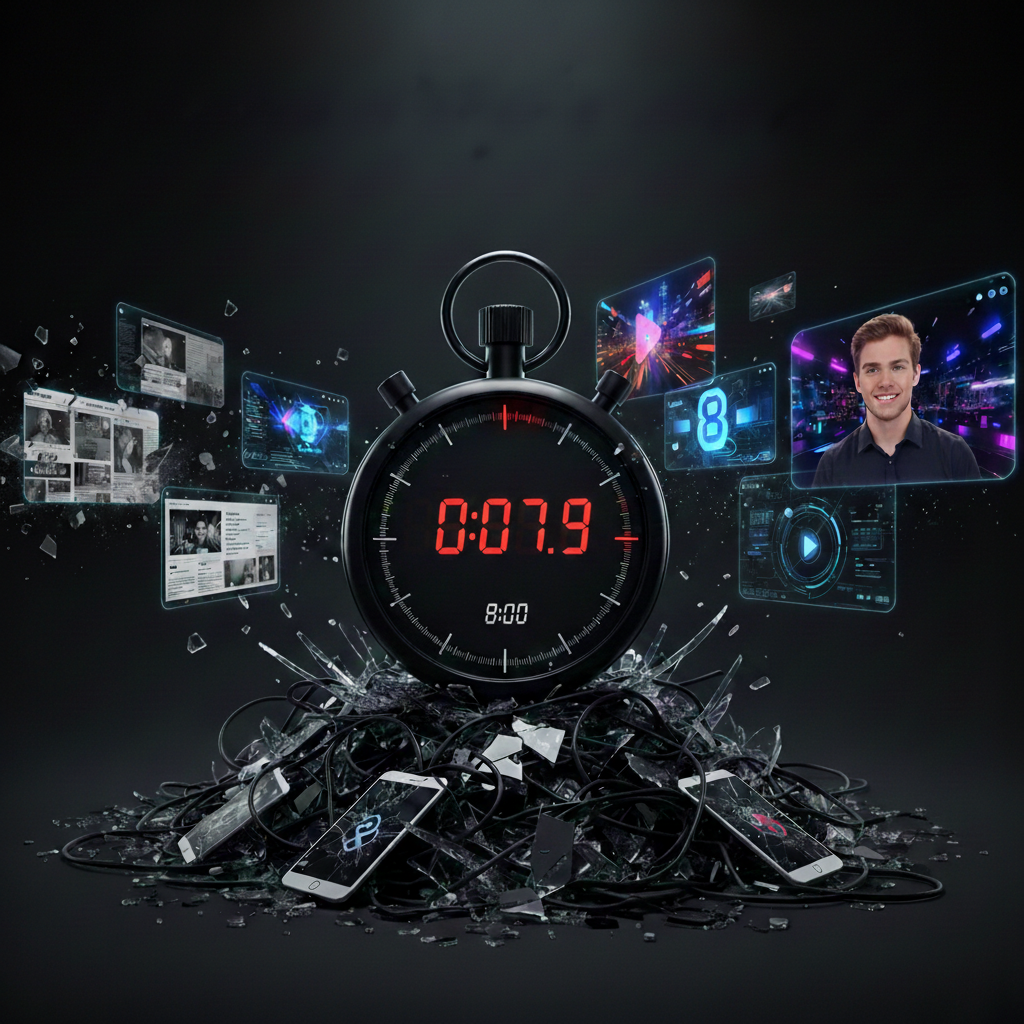
For a decade, the static banner was the reliable workhorse of digital advertising. It was clean, predictable, and easy to approve. But in the current attention economy, the static ad has become a ghost. It lingers in our feeds, but it is no longer haunting the consumer’s subconscious.
As a strategist, I am seeing a fundamental shift in how high-performance brands communicate. We are moving away from the "perfectly polished" static asset and toward the 8-second micro-video. This shift isn't just a trend; it’s an evolution driven by human neurobiology and a necessary survival mechanism for agencies drowning in the "unlimited revision" trap.
To understand why 8 seconds is the new gold standard, we have to look past the creative surface and examine the psychological friction and operational rot that define modern marketing.
The Neurobiology of the "Micro-Moment"
Humans are biologically hardwired to prioritize motion. Our ancestral survival depended on detecting movement in our peripheral vision—a rustle in the grass could mean a predator or a meal. In the digital landscape, this translates to attentional capture.
The Looming Effect
Static images require a cognitive "lift." The user must consciously decide to look, decode the text, and interpret the context. Video, even at a mere 8 seconds, triggers the "looming effect." The brain processes moving objects faster than static ones because motion implies an unfolding narrative.
Dopamine and the Loop
The 8-second window fits perfectly within the dopamine feedback loop of modern social scrolling. It provides a complete narrative arc—Hook, Value, CTA—before the user’s "boredom reflex" kicks in. By the time the brain considers scrolling past, the message has already been delivered.
The Efficiency Paradox: Why "Unlimited Revisions" are Killing Your Margin
The transition to video is often met with internal resistance at agencies. The reason? The Revision Trap. There is a pervasive myth in our industry that "flexibility" is a value proposition. Agencies pitch "unlimited revisions" as a sign of commitment to quality. In reality, it is a strategic failure that quietly drains margins and destroys campaign velocity. This is especially true in video production, where a "simple change" to a frame can ripple through rendering, sound design, and color grading.
The Cost of Decision Paralysis
When a client knows they have infinite bites at the apple, they stop making critical decisions. This leads to decision paralysis.
-
The internal cost: Your senior talent is spent tweaking the hue of a button rather than architecting the next big move.
-
The coordination tax: Every revision requires a fresh round of internal QA, project management updates, and client-side stakeholder meetings.
-
The launch delay: A campaign that sits in "Review v8" for three weeks loses its cultural relevance and its competitive edge.
Diminished Accountability
Unlimited revisions create a safety net that encourages sloppy initial thinking. If we can always "fix it later," we lose the discipline required to get the strategy right the first time. High-performing agencies understand that creative constraints are not shackles; they are guardrails.
Separating Strategy from Execution
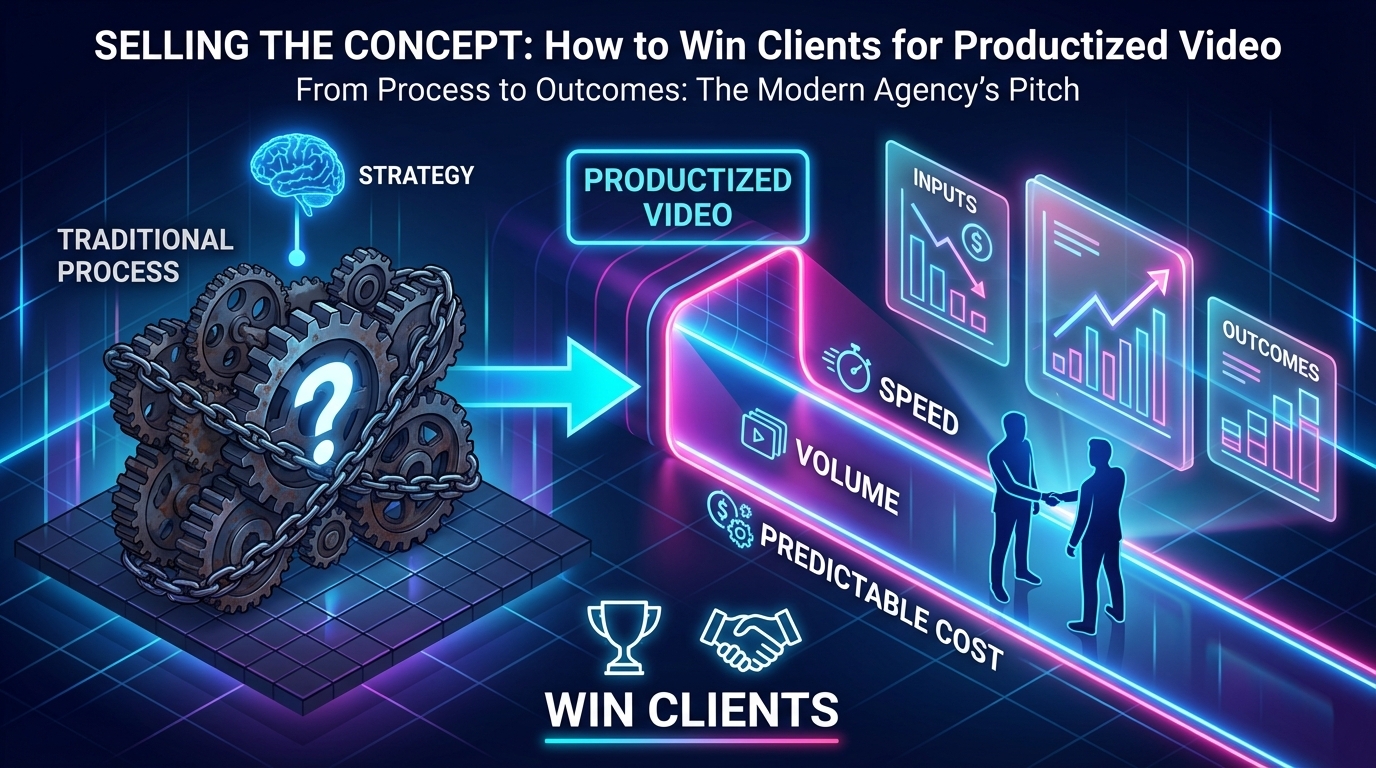
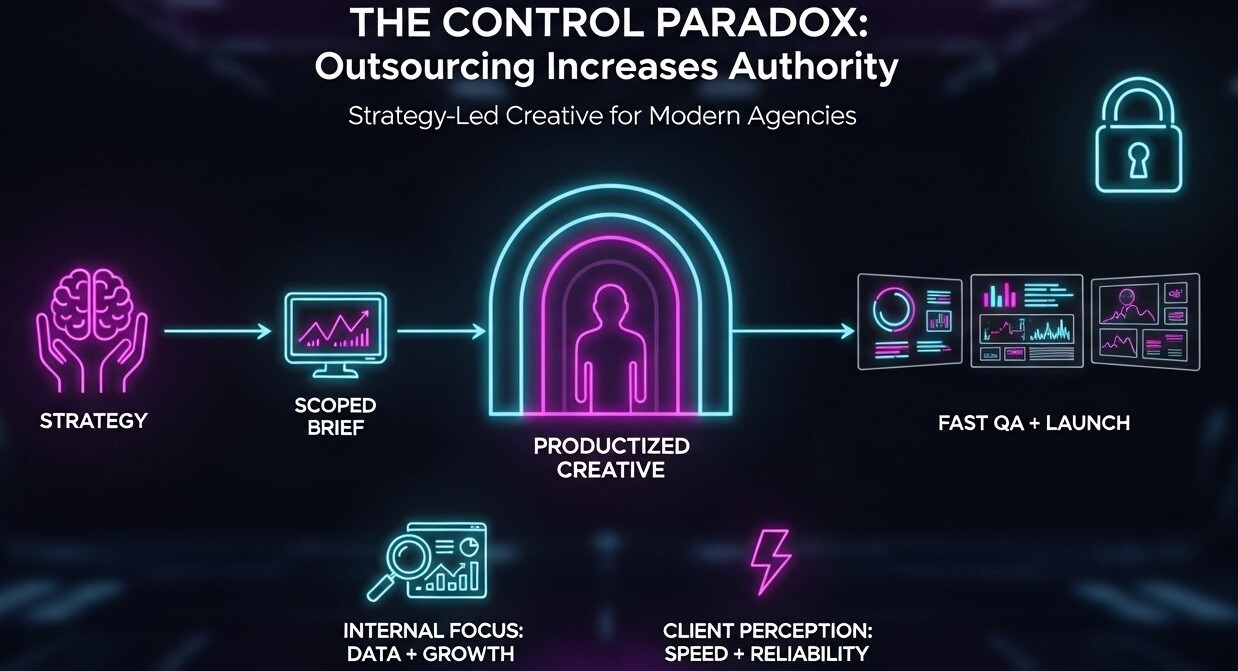
To successfully deploy 8-second video at scale without going bankrupt, agencies must enforce a hard line between Strategy and Execution.
In the static ad era, these two often bled together. With video, that lack of structure is fatal. The strategy defines the why and the who, while the execution is a high-speed sprint. When you separate the two, you protect the creative process from the "design by committee" rot that plagues large organizations.
| Factor |
Legacy Approach (Static/Infinite Revs) |
Modern Approach (8-Sec Video/Fixed Scope) |
| Feedback Loop |
Subjective, emotional, and unending. |
Data-driven and time-boxed. |
| Speed to Market |
4–6 weeks (perfectionism). |
7–10 days (iteration). |
| Cognitive Load |
High (requires reading/analysis). |
Low (requires visual processing). |
| Agency Margin |
Eroded by "Scope Creep." |
Protected by "Fixed Outputs." |
The 8-Second Framework: Hook, Body, Bridge
If you want to replace static ads effectively, you cannot simply animate a JPEG. You must build for the format. We utilize a psychological framework designed for maximum efficiency:
-
The Pattern Interrupt (0–2 Seconds): You must break the "scroll-trance." This isn't about being loud; it’s about being different. Use high-contrast movement or a visual "cold open" that starts in the middle of an action.
-
The Information Dense Core (3–6 Seconds): This is where the behavioral psychology kicks in. Show, don't tell. If the product is a software tool, show the result of a single click. If it's a physical product, show it in use.
-
The Frictionless CTA (7–8 Seconds): The final two seconds are for the "Bridge." This is the transition from viewer to actor. The call to action must be singular and inevitable.
Enforcing Creative Constraints
The most successful campaigns move faster because the teams involved are forced to respect the timeline. At a high-end agency, we don't offer unlimited revisions because we value the client’s results more than their comfort.
Protecting the Timeline
When the scope is fixed—for example, two rounds of revisions, period—the client is forced to consolidate their feedback. This leads to clearer communication and a more focused final product. It forces the stakeholders to ask: "Is this change actually going to move the needle, or is this just my personal preference?"
Focus on Results, Not Polish
In the world of 8-second video, "perfect" is the enemy of "profitable." Because these assets are meant to be consumed and discarded in a high-velocity environment, the "polish" of a 1990s TV commercial is irrelevant. What matters is resonance. By limiting revisions, we shift the focus from aesthetic perfection to strategic efficacy.
The Bottom Line: Velocity is the Only Competitive Advantage
The shift from static ads to 8-second videos is more than a change in file format; it is a change in philosophy. It is an admission that the consumer’s time is the most valuable currency on earth.
Agencies that continue to offer "unlimited revisions" on static assets are essentially selling a slow death. They are inviting the client to indulge in a cycle of perfectionism that yields diminishing returns. Meanwhile, the agencies that embrace the 8-second sprint—enforcing strict creative constraints and separating strategy from the rapid-fire execution of video—are the ones seeing actual growth.
When we stop obsessing over the "finality" of an image and start focusing on the "velocity" of a video, we stop being vendors and start being partners in growth.
At 8SecondStudio, we don’t just create content; we support agencies with fast, ad-ready short-form video execution — designed to plug into existing campaigns without friction. Click here to Get Started and see how our 8-second sprint methodology can transform your digital presence today.